Korea Investor Visa (D-8): Application Process and Required Documents | Where Foreign Investors Actually Get Stuck
The D-8 investor visa follows a fixed order: foreign investment report → fund remittance → company incorporation → foreign-invested company registration → visa application. If one step goes out of order, you may have to start over from the beginning. This visa is for foreign investors who want to set up a company in Korea, or invest in an existing Korean business, and take part in running it. This guide covers each step of the process and the full document list. It also covers the two areas where applications most often stall: explaining where the investment funds came from, and the review of your business premises.
Who Qualifies for the D-8 Visa and Basic Requirements
Start by Identifying Your D-8 Subcategory
D-8 looks like a single visa, but it is split into several subcategories. Each one has its own documents and review criteria, so first work out which one fits you. Most inquiries we get are about corporate investment (D-8-1).
| Subcategory | Eligible Applicants | Notes |
|---|---|---|
| D-8-1 | Executives and managers who invested in a foreign-invested company (corporation) | Most common type |
| D-8-2 | Foreign nationals founding a venture company | Separate venture company certification required |
| D-8-3 | Foreign nationals investing in a business run by a Korean national | Investment in a sole proprietorship |
| D-8-4 | Tech entrepreneurs holding a degree, intellectual property, etc. | Startup immigration points system applies |
Legal Basis and Investment Thresholds
The D-8 status of stay is set out in Appendix 1-2 of the Enforcement Decree of the Immigration Act. The investment requirements come from Article 2 of the Foreign Investment Promotion Act and its Enforcement Decree, which set the minimum investment amount and the equity ownership requirement. Here's what matters most. Investing more than the minimum isn't enough on its own. You also have to show that the money actually came from overseas and is being used in the business. Amendments to the minimum investment and equity rules are still being discussed, so we'll confirm this year's figures with you during your consultation.
Step-by-Step: How to Apply for a Korean Investor Visa
The Full Process at a Glance
The process looks simple, but each step depends on the result of the step before it. If the paperwork is wrong at one step, everything after it stops.
| Step | What Happens | Handled By |
|---|---|---|
| 1 | Foreign investment report | Foreign exchange bank or KOTRA Invest Korea |
| 2 | Wire the investment funds from overseas and obtain a certificate of foreign currency purchase | Foreign exchange bank |
| 3 | Company incorporation registration | Competent registry office |
| 4 | Business registration | Competent tax office |
| 5 | Foreign-invested company registration | Foreign exchange bank or KOTRA |
| 6 | Apply for a Certificate for Confirmation of Visa Issuance, or change your status of stay | Competent immigration office |
| 7 | Visa issuance, entry into Korea, and alien registration | Korean embassy/consulate / immigration office |
Where Most Applications Get Stuck
The foreign investment report is filed under Article 5 of the Foreign Investment Promotion Act. Registration as a foreign-invested company falls under Article 21 of the same Act. The most common problem is that the amount reported in Step 1 doesn't match the amount actually wired in Step 2. If the wire lists a purpose other than "investment," the funds may not be recognized as investment capital, and you may have to send them again.
Caution: Funds may not count as foreign investment if you first send them to a personal Korean bank account or split them across transfers under several people's names. Confirm the receiving account and the stated purpose of the transfer before you send anything.
Why Processing Times Vary
Review time for a Certificate for Confirmation of Visa Issuance depends on the immigration office's workload and on whether it asks for more documents. Each request for additional documents adds time. Offices differ in processing speed and in how often they ask for more, so in practice your timeline depends mostly on how complete your first submission is. We'll tell you how your office has been handling recent cases during your consultation.
D-8 Visa Required Documents
Core Documents
Even with a long document list, a single missing item can get your application returned. The core documents for D-8-1 are listed below.
| Category | Document | Notes |
|---|---|---|
| Applicant | Application for Certificate for Confirmation of Visa Issuance or Integrated Application Form, passport, passport photo | Check passport validity |
| Proof of investment | Certificate of Registration as a Foreign-Invested Company | Issued after registration is complete |
| Proof of investment | Proof of funds brought in (certificate of foreign currency purchase, wire transfer receipt, etc.) | Must match the reported amount |
| Company documents | Certified copy of corporate register, business registration certificate | Recently issued copies |
| Company documents | Shareholder register | Confirms the applicant's equity stake |
| Business premises | Office lease agreement, photos of the premises | Shows that a real office exists |
| Business plan | Business plan | Explains the actual business |
What People Commonly Miss
Documents issued overseas often need an apostille or consular legalization, plus an attached translation. If the investor is a company, you'll also need the foreign parent company's incorporation documents and proof of who has authority to represent it. The official document list is posted on HiKorea, but immigration offices often use their discretion to ask for more during review. The document list can change, so check the current version with the relevant office.
Document Checklist
- Is your passport valid for long enough?
- Do the reported amount, the wired amount, and the registered capital all match?
- Are all overseas documents authenticated and translated?
- Is the lease agreement in the company's name?
- Does your business plan include revenue projections and a hiring plan?
Not sure how far along your paperwork is? Send us what you have now, and we'll tell you what's missing. Book a free consultation now → +82-2-363-2251 / KakaoTalk: alexkorea
Wiring Investment Funds and Proving the Source of Funds
The Money Trail Matters More Than the Paperwork
D-8 applications are decided more by how well you explain your funds than by how many documents you submit. Having the money in the bank isn't enough. If you can't clearly explain where it came from, things can go wrong quickly. Reviewers look at how the funds built up in your overseas account: salary, business income, sale of assets, and so on. If a large sum landed all at once in the last few months, expect to be asked for more explanation.
What Happens When Source-of-Funds Documentation Is Weak
In a recent similar case, a client received a request for more documents because the funds had been wired from a family member's account instead of the investor's own. Without a solid explanation, the money can be treated as someone else's funds, which puts the applicant's investor eligibility itself at risk. When family gifts or loans are part of the funds, which documents you need and how to present them varies case by case. We'll walk you through the right approach during your consultation.
Practical tip: Organize your overseas account transaction history before you wire the funds. If you try to piece together the source after the transfer, the explanation will look forced, and reviewers will notice right away.
What Reviewers Look for in Your Business Premises and Business Plan
Proving Your Business Premises Are Real
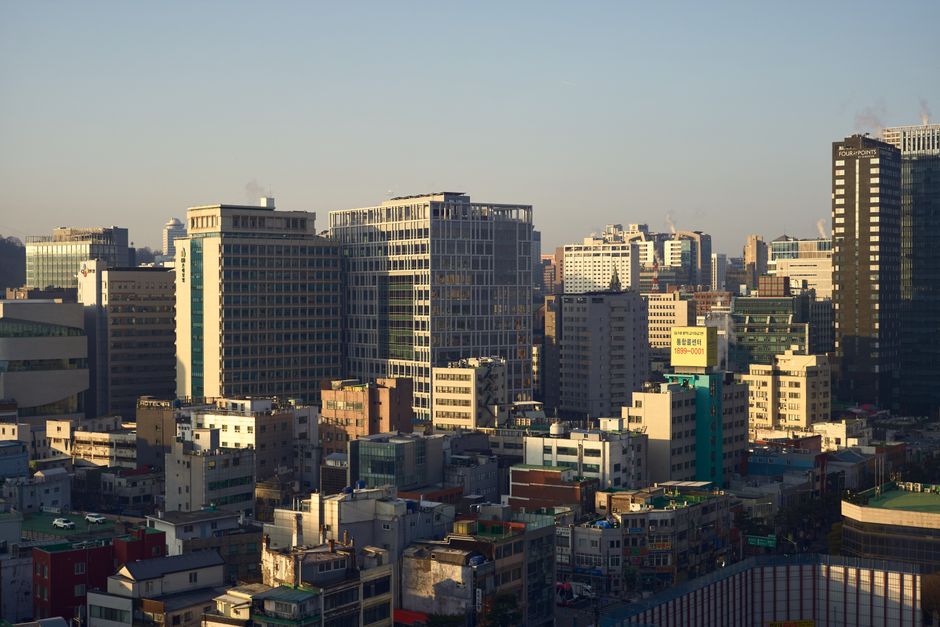
In practice, a D-8 review sometimes includes an on-site inspection of your business premises. Depending on the type of business, a shared office or virtual office may not be accepted as your business premises. Photos that show your signage, furniture and equipment, and actual workspace can save you a lot of explaining.
A Persuasive Business Plan Beats a Long One
In a business plan, figures that add up and have evidence behind them count for more than length. Reviewers focus on three things: where the investment money will go, how the business will earn revenue, and whether you plan to hire Korean employees. In crowded industries such as trading, wholesale, and retail, weak evidence of real clients and specific contracts will make reviewers doubt the business is real. This is where applications diverge. Within the same industry, the way the business plan is written affects how many requests for more documents you get.
D-8 Extensions and What Comes After
What Reviewers Look for at Extension
When you extend a D-8, your actual business performance matters more than it did in your first application. The main items checked are revenue, tax filing records, and the number of employees enrolled in employment insurance. Applicants often get stuck at extension when there's no sign of real business activity at the premises.
If You're Planning to Move to Residency or Permanent Residency
To move from D-8 to an F-2 residence visa or F-5 permanent residency, you must separately meet requirements for investment size and for the number of Korean nationals you employ. Whether you can make that switch later depends on how you structure your initial investment. These requirements have been adjusted several times in recent years. If you plan to stay long term, have your structure reviewed before you incorporate.
Frequently Asked Questions (FAQ)
Q1. What is the minimum investment for a D-8 investor visa? You must invest at least the minimum amount set by the Enforcement Decree of the Foreign Investment Promotion Act. Immigration reviewers also check whether the investment fits the size of the business, not just whether it meets the minimum. We'll confirm the right level for your industry during your consultation.
Q2. Can I enter Korea on a tourist visa and switch to D-8? As a rule, you generally can't change your status of stay while in Korea on visa-exempt (B-1) or short-term visit (C-3) status. The usual route is to get a Certificate for Confirmation of Visa Issuance while overseas and then have the visa issued at a Korean embassy or consulate. Whether an exception might apply depends on how you entered Korea and your current status of stay.
Q3. How much does it cost to apply? Costs consist of government-set fees plus administrative processing fees. Because costs vary by case, we'll give you an exact quote during your free consultation.
Q4. Can I wire the investment funds in several installments? Yes, but each transfer must be labeled as foreign investment and have its own supporting documents. If any installment is missing documentation, the combined total may not be recognized.
Q5. Can my family get visas too? The spouse and minor children of a D-8 holder may be able to apply for dependent family (F-3) status. Proof of family relationship must be separately authenticated and translated, so preparing it along with your own documents will save time.
Q6. If my application is refused, can I reapply? Yes. But if you resubmit the same documents without fixing the reason for refusal, the outcome is unlikely to change. The wording on the refusal notice often doesn't show the real reason, so start by working out what actually went wrong.
Need Expert Advice?
With a D-8, the order of the steps, how you wire the funds, and how you explain their source all have to line up at the same time. The two hardest parts to handle alone are making the reported investment amount match the transfer records, and writing a source-of-funds explanation that satisfies the reviewer. Immigration policy and investment requirements change often, so have your plan checked against the current rules before you start.
About Vision Administrative Agency
Vision Administrative Agency handles everything from setting up a foreign-invested company to the D-8 investor visa, extensions, and switching to residency or permanent residency.
- Filing foreign investment reports and registering foreign-invested companies on your behalf
- Reviewing how your investment funds are wired and preparing source-of-funds documentation
- Writing business plans and applying for the Certificate for Confirmation of Visa Issuance
- D-8 extensions and assessing eligibility to switch to F-2 or F-5
Contact Us
- Phone: +82-2-363-2251
- KakaoTalk: alexkorea
- Email: [email protected]
- Address: 3F, Sungwoo Building, 324 Toegye-ro, Jung-gu, Seoul 04614, Republic of Korea
Because costs vary by case, we'll give you an exact quote during your free consultation.
Need Expert Consultation?
Don't navigate complex procedures alone. Our professional consultants will guide you.